




















Time Tracking Software
What are the benefits of time tracking software in 2026?
With the rise of AI tools that promote themselves as all-in-one saviours, it’s worth reminding the modern workforce that standalone tools can still do the job the best. Time tracking apps, for example, are a solid case in point. While AI can technically monitor your every movement and mouse click, developing a consistent routine with entering each task and expense can give you and your managers a much ‘truer’ idea of the big picture. This article explores the benefits of continuing to use time tracking software in 2026 —how it works, why it matters, and how businesses can use it to create smarter, more efficient, and more human-centered workflows.

The evolution of time tracking
Before diving into the benefits of time tracking, it’s worth understanding how far the concept has come.
In the past, tracking time often meant manual time tracking—employees filling out timesheets at the end of the week, trying to recall how they spent their hours. This approach was not only error-prone but also frustrating. It led to inaccurate data, disputes over work hours, and inefficient manual data entry processes.
Fast forward to 2026, and modern time tracking tools look very different. With automatic time tracking, integrations with project management software, and seamless mobile apps, organizations can now capture accurate, real-time insights into how work actually happens.
This shift has unlocked a wide range of time tracking benefits that go far beyond simply logging hours.
1. Accurate visibility into how time is spent
One of the most fundamental advantages of time tracking is visibility. Businesses can finally understand how their teams operate—not in theory, but in reality.0
With modern time tracking tools, organizations can see:
- How much time is spent on specific tasks
- Which certain tasks take longer than expected
- Where bottlenecks occur in workflows
- How different team members allocate their effort
This level of insight is powered by rich time tracking data and granular tracking data, which together provide a clear picture of day-to-day operations.
When teams begin tracking time consistently, patterns emerge. Leaders can identify inefficiencies, while employees gain a better understanding of their own habits and time management.
Ultimately, this leads to one key outcome: more informed decision-making based on all the data, not guesswork.
2. Improved project planning & execution
Effective project management depends on accurate planning. Without reliable estimates, timelines slip, budgets expand, and stress levels rise. This is where time tracking software helps in a very practical way.
By analyzing historical data and past time data, businesses can:
- Create more realistic project timelines
- Forecast project costs with greater accuracy
- Allocate resources more effectively
- Anticipate risks before they escalate
A project manager no longer has to rely on intuition alone. Instead, they can draw on concrete time tracking data from previous work to plan future projects.
This makes it easier to:
- Meet project deadlines
- Align expectations across stakeholders
- Keep everyone on the same page
Over time, this leads to smoother execution and fewer unpleasant surprises.
3. Better resource allocation
In any organization, time is one of the most valuable resources. But without visibility, it’s often misallocated.
Modern tracking tools enable advanced resource management by showing exactly how the team's time is being used.
With this insight, businesses can:
- Shift workloads between different team members
- Identify underutilized or overworked individuals
- Optimize staffing levels
- Ensure the right people are working on the right specific tasks
This results in better resource allocation, which directly impacts both efficiency and employee satisfaction.
When organizations understand how employees spend their work hours, they can avoid overload and ensure a more balanced distribution of responsibilities.
4. Increased employee productivity (without micromanagement)
There’s a common misconception that employee time tracking leads to surveillance. In reality, when implemented thoughtfully, it does the opposite.
Modern time tracking solution platforms focus on empowerment rather than employee monitoring. They give individuals visibility into their own time spent, helping them identify distractions and refine their workflows.
This leads to:
- Stronger time management skills
- More intentional work habits
- Greater autonomy over how employees manage their own time
By highlighting inefficiencies, teams can eliminate time wasting activities and focus on high-impact work.
The result? Organizations can improve productivity and improve employee productivity without creating a culture of mistrust.
5. Accurate billing & financial control
For service-based businesses, one of the most critical benefits of time tracking software is financial accuracy.
When teams track billable hours precisely, companies can:
- Ensure accurate billing
- Avoid undercharging clients
- Justify invoices with detailed breakdowns
- Improve profitability
Modern time tracking app solutions often integrate with invoicing systems, turning logged hours into invoices with minimal friction.
This also improves visibility into project costs, allowing businesses to compare:
- Estimated vs. actual cost
- Planned vs. actual time investment
Over time, this data helps organizations refine pricing strategies and improve margins.
6. Data-driven decision making
In 2026, intuition alone isn’t enough. Organizations rely on data driven decision making to stay competitive.
Time tracking plays a crucial role in this shift.
By collecting and analyzing time data, businesses can:
- Identify trends across teams and projects
- Understand which various tasks deliver the most value
- Optimize business processes
- Make smarter strategic decisions
The combination of time tracking data and broader tracking data creates a powerful feedback loop.
Leaders can continuously refine operations based on what’s actually happening—not what they assume is happening.
7. Streamlined workflows & reduced friction
Another major advantage of modern tracking software is its ability to simplify workflows.
By replacing manual time tracking with automated systems, businesses can:
- Reduce administrative overhead
- Eliminate repetitive manual data entry
- Minimize errors
- Free up time for meaningful work
This contributes to optimizing workflows, allowing teams to focus on delivering value rather than managing processes.
When employees spend less time on admin tasks, they have more energy to dedicate to certain tasks that drive results.
8. Enhanced collaboration across teams
In today’s environment of distributed teams and remote work, collaboration can be challenging.
Time tracking tools help bridge this gap by providing shared visibility into work patterns.
With access to team's time tracking data, teams can:
- Coordinate schedules more effectively
- Understand each other’s workloads
- Avoid duplication of effort
- Align priorities
This ensures that all team members are working toward common goals.
It also helps teams stay on the same page, even when they’re spread across different locations and time zones.
9. Real-time insights through mobile accessibility
The rise of mobile apps has transformed how teams interact with technology.
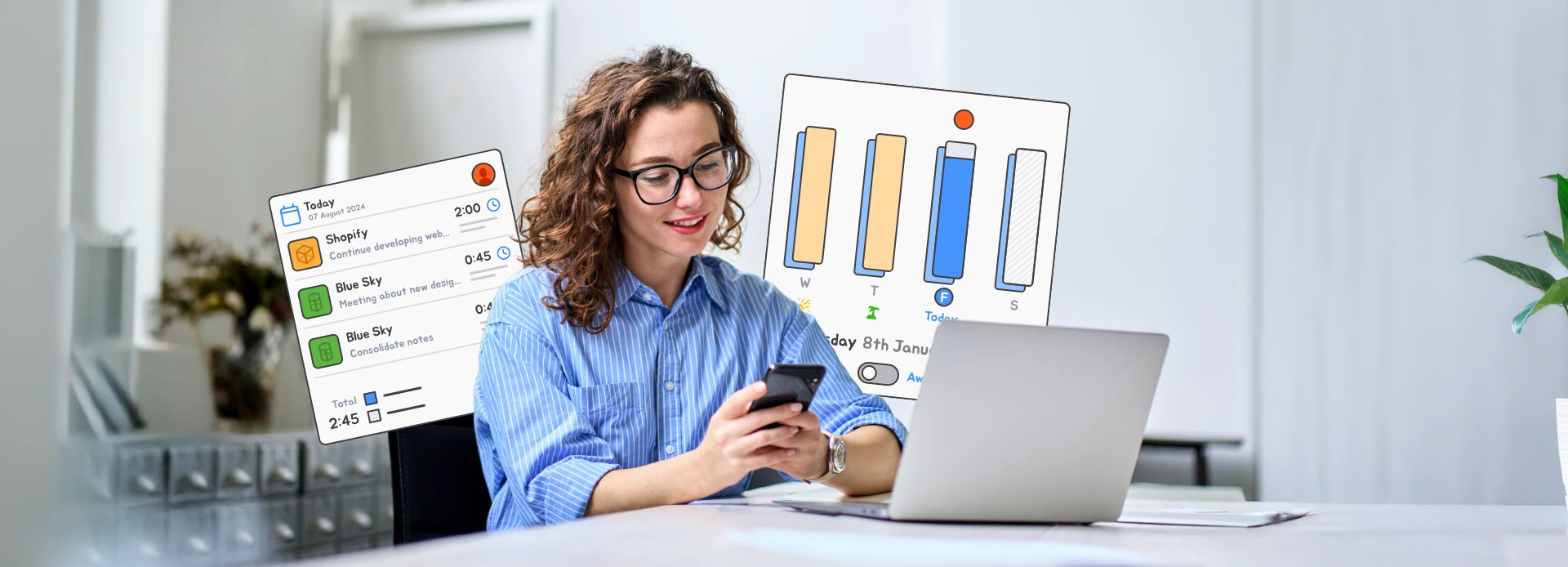
A modern mobile time tracking app allows employees to log hours, review time data, and manage their schedules from anywhere.
This is especially valuable for:
- Field workers
- Freelancers
- Hybrid teams
With a tracking app accessible on smartphones, employees can:
- Track time accurately in real time
- Update progress on the go
- Maintain consistency in their records
This flexibility supports modern work styles while ensuring that tracking time remains seamless.
10. Improved accountability & transparency
Transparency is a cornerstone of high-performing teams.
By maintaining an accurate record of how work is completed, time tracking software fosters accountability without resorting to heavy-handed oversight.
Employees can see:
- How their contributions fit into larger goals
- How their employees time aligns with expectations
- Where they might need to adjust their approach
Managers, meanwhile, gain a fair and objective view of performance.
This creates a culture of trust, where expectations are clear and progress is visible.
11. Supporting remote & flexible work models
The shift toward remote work and flexible schedules has made traditional oversight methods obsolete.
In this context, employee time tracking software provides a lightweight way to maintain structure without sacrificing autonomy.
Teams can:
- Track work hours regardless of location
- Maintain consistency across distributed teams
- Ensure alignment without constant check-ins
This supports modern work arrangements while preserving productivity and accountability.
12. Stronger focus on high-value work
When teams understand how they spend their time, they can make better choices about where to focus.
Time tracking tools highlight:
- Low-value activities
- Repetitive tasks
- Opportunities for automation
This enables teams to prioritize tasks effectively and shift their energy toward work that matters.
By focusing on high-impact specific tasks, organizations can deliver better results with the same resources.
13. Continuous improvement through feedback loops
One of the less obvious benefits of time tracking is its role in continuous improvement.
With consistent tracking data, organizations can:
- Review performance regularly
- Identify areas for growth
- Test new approaches and measure results
This creates a cycle of learning and refinement.
Over time, businesses become more efficient, more adaptable, and more resilient.
14. Integration with broader digital ecosystems
Modern time tracking software doesn’t exist in isolation.
It integrates with:
- Project management tools
- Project management systems
- Project management software
- Accounting platforms
- Communication tools
This creates a unified ecosystem where data flows seamlessly between systems.
As a result, teams can:
- Manage projects more effectively
- Access insights in real time
- Reduce duplication of effort
Integration transforms time tracking tools into a central hub for operational intelligence.
15. Supporting strategic growth
As organizations grow, complexity increases.
More clients, more projects, and more employees mean more moving parts.
A robust time tracking solution provides the foundation needed to scale effectively.
By leveraging time data, businesses can:
- Forecast demand
- Plan hiring
- Optimize operations
- Maintain quality as they expand
This makes time tracking not just a tactical tool, but a strategic asset.
16. Encouraging better work habits
Finally, one of the most human benefits of time tracking software is its impact on behavior.
When employees regularly reflect on how they spend their time, they become more intentional.
They begin to:
- Prioritize tasks
- Avoid distractions
- Structure their day more effectively
This leads to improved time management and a healthier relationship with work.
Employees gain a sense of control over their schedules, which contributes to both productivity and well-being.
Best practices for successful implementation
To fully realize these time tracking benefits, organizations must approach implementation thoughtfully.
A successful implementation involves:
- Choosing the right time tracking app
- Communicating clearly with team members
- Emphasizing transparency and trust
- Avoiding intrusive employee monitoring
- Aligning tools with existing business processes
It’s also important to ensure that employees understand the purpose of tracking time—not as a tool for control, but as a way to improve outcomes for everyone.
In 2026, the role of time tracking software has expanded far beyond simple timekeeping.
It has become an essential tool for organizations that want to:
- Improve efficiency
- Enhance collaboration
- Make smarter decisions
- Support modern work environments
From enabling accurate time tracking and accurate billing to powering data driven decision making, the benefits of time tracking are both wide-ranging and deeply impactful.
As work continues to evolve, the organizations that succeed will be those that understand how to use time tracking tools not just to measure work—but to improve it.
Because ultimately, the real value of time tracking isn’t in the hours it records.
It’s in what those hours reveal—and how you choose to act on them.