
















Workplace Distractions
How to deal with distractions in the workplace in 2026
Distraction has always been part of working life. But in 2026, the number of things competing for our attention can make staying focused feel like a job in itself.
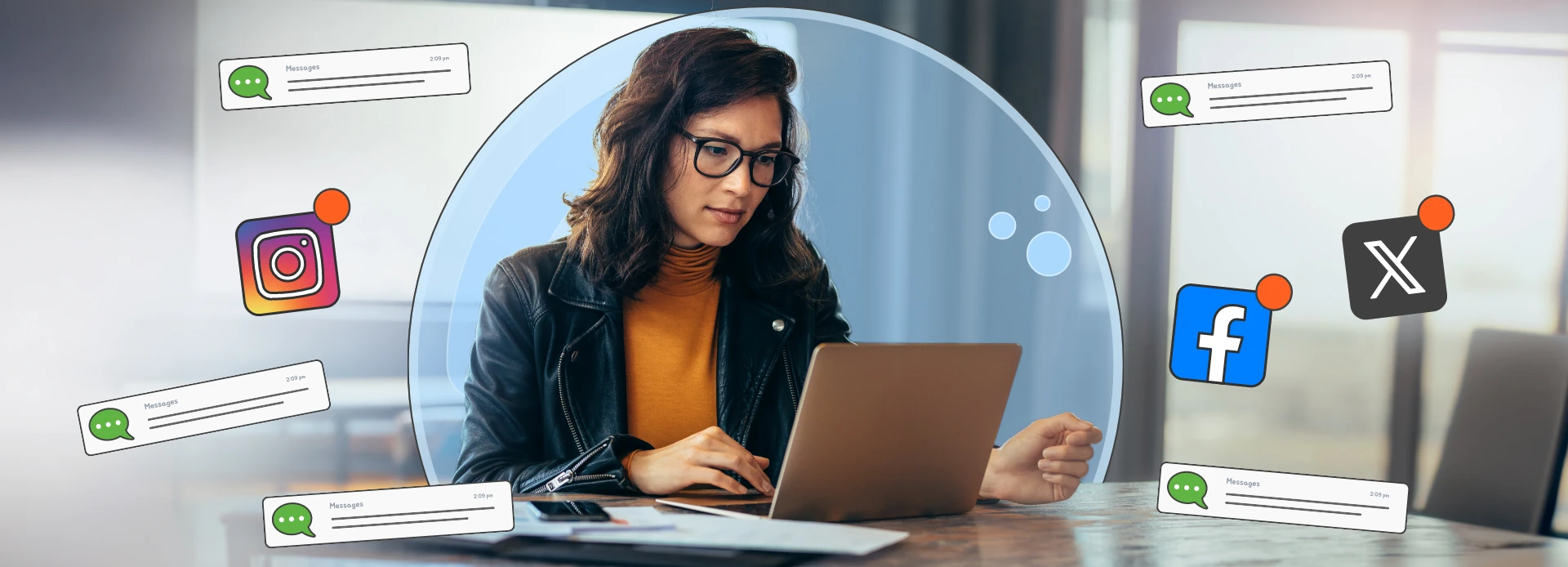
A phone vibrates. A Slack message appears. Someone asks a “quick question.” An email arrives marked urgent. You remember something you need to do in your personal life. By the time you return to the original task, you may have forgotten exactly where you were.
Modern distractions in the workplace come in many forms, and they aren't limited to a noisy office. For people working remotely, the distractions might instead be housework, family members, deliveries, social media or the temptation to put the television on in the background.
The solution isn't to eliminate every possible interruption. That's neither realistic nor necessarily desirable. Instead, workers and employers need the right strategies to protect periods of concentration while leaving enough flexibility for communication, collaboration and the occasional unexpected problem.
Here’s how to do it.
Key takeaways
The most important thing to understand about workplace distractions is that they aren't all created equal. A brief interruption that genuinely helps solve a problem is very different from checking your phone every three minutes.
Reducing distractions therefore requires a combination of individual habits and a supportive work environment. Employees can use time blocks, turn off unnecessary alerts, set boundaries and organise their day around periods of focused work. Employers, meanwhile, can reconsider inefficient meetings, excessive messaging and noisy working environments.
Above all, the goal isn't uninterrupted focus for eight straight hours. It's creating enough distraction-free time for employees to complete meaningful work without being pulled in five directions at once.
What are the most common workplace distractions?
Ask ten people about the biggest workplace distractions and you'll probably receive ten slightly different answers. An employee in an open-plan office might immediately mention chatty coworkers, while a remote employee might point to their phone.
Some of the most common workplace distractions include:
- Cell phones and social media: Personal messages, news, social platforms and endless notifications can quickly eat into work hours.
- Coworker interruptions: A quick conversation can turn into 20 minutes away from a task, particularly when noisy coworkers repeatedly interrupt periods of concentration.
- Constant notifications: Email, workplace chat platforms, project management software and other digital tools can create a stream of work related notifications throughout the day.
- Inefficient meetings: Meetings without a clear purpose can consume the team's time while breaking up periods that could otherwise be used for focus heavy tasks.
- Office noise: Conversations, phone calls and general background activity can make concentration difficult, particularly in open offices.
- Remote work distractions: Housework, family, pets, television and other household activities can become productivity distractions when working remotely.
The top workplace distractions will naturally vary between employees, jobs and generations. A baby boomers-versus-Gen-Z analysis can make for a catchy headline, but age alone doesn't determine what distracts someone. The nature of the task, workplace culture, technology and physical surroundings are often far more important.
Understanding your own biggest distractions is therefore the first step towards controlling them.
Why are distractions at work such a problem?
The obvious answer is lost productivity. If an employee spends ten minutes scrolling through social media instead of working, that's ten minutes that hasn't gone towards their work.
But the negative effects of distraction can be more complicated than simply adding up wasted minutes.
Interruptions can impose what researchers sometimes describe as a "resumption lag": after switching away from something, a worker needs time to reorient themselves and regain focus on the original task. That's why constant interruptions can be particularly disruptive during cognitively demanding work.
Distractions can also encourage poor time management. When a day is repeatedly fragmented, important work gets pushed backwards, tasks take longer than expected and employees may feel increasingly distracted as unfinished work begins piling up.
The result can be decreased productivity alongside higher stress levels. An employee might technically spend their entire day working but still reach 5pm wondering what they actually accomplished.
For employers, this makes employee productivity only part of the equation. A workplace that constantly demands employees' attention without allowing them time to concentrate can also affect job satisfaction and well being.
1. Work out what's actually distracting you
Before trying to avoid distractions, identify them.
For a few workdays, pay attention to what breaks your concentration. You don't need an elaborate spreadsheet. Simply make a note each time you unexpectedly switch away from what you're doing.
You might discover that your biggest culprits aren't the things you expected. Perhaps you assumed your cell phones were the problem, but most interruptions actually come from workplace chat. Maybe office distractions aren't an issue at all, while frequent unnecessary meetings are.
A project manager may find that colleagues constantly approach them for answers, for example. In this case, the solution isn't simply greater self-discipline. Their role itself is generating interruptions, meaning the team may need a better process for asking questions.
Once you know what is causing the problem, reducing distractions becomes much easier.
2. Turn off notifications you don't need
Digital distractions have a particularly powerful advantage over other common distractions: they're specifically designed to attract your attention.
That doesn't mean abandoning email, chat or other digital tools. It means becoming more selective about when they are allowed to interrupt you.
Turn off constant notifications that don't require immediate action. Consider muting group chats during concentrated work, closing your email tab and checking messages at designated points during the day.
If your role requires rapid responses, you can still create exceptions for genuinely important people or channels.
The objective is to put attention back in your own hands. Instead of every incoming message deciding what you think about next, you decide when to check messages.
3. Use time blocks for concentrated work
If important tasks are constantly being squeezed between meetings and messages, reserve specific time blocks for them.
For example, you might block 9am to 10:30am for writing a report and avoid scheduling meetings during that period. Another employee might reserve the first hour after lunch for analytical work.
The best work schedule will depend on your role and energy levels. If you're sharpest in the morning, protect those hours for difficult tasks rather than spending them clearing emails.
A to do list can complement this approach. Rather than starting the morning by reacting to whatever appears in your inbox, identify your priorities and assign your most important task a specific period of focused time.
4. Try the Pomodoro Technique
If maintaining concentration for long periods is difficult, the Pomodoro Technique offers a more structured alternative.
The traditional Pomodoro method involves concentrating on a task for 25 minutes, followed by a five minute break. After several cycles, you take a longer break.
The precise numbers aren't sacred. If 25 minutes feels too short, you might work for 40 or 50 minutes before taking a short break. What matters is separating periods of deliberate focus from deliberate rest.
A break also doesn't have to mean checking social media. Stand up, refill your water, stretch or look out a window. A genuine five minute break can give your brain a change of pace without sending you into an entirely new stream of information.
5. Set boundaries with coworkers
Coworkers are one of the most valuable parts of a good workplace. They can also be one of the most common distractions.
You don't need to become antisocial to minimize distractions. Instead, develop simple signals that communicate when you're available.
If you're doing concentrated work in person, noise canceling headphones can provide both practical noise reduction and a visual indication that you'd prefer not to be interrupted. Teams can also establish shared focus periods during which non-urgent questions are saved for later.
Remote workers can achieve something similar by setting a status such as “focusing until 11am.”
The important part is to set boundaries without making communication unnecessarily difficult. Some interruptions really are urgent, and collaboration remains part of most jobs.
6. Tackle office noise
You can switch off a notification. Unfortunately, you can't mute the person having a very enthusiastic conversation three desks away.
Office noise is among the most obvious office distractions, particularly in open offices where conversations and movement are difficult to escape.
Noise canceling headphones can help significantly reduce background sound for some employees. Employers can also provide quiet areas for concentrated work, phone booths for calls and separate spaces for collaborative conversations.
This is where reducing distractions becomes an organisational responsibility rather than something individual employees must solve themselves. If an office is physically designed in a way that makes focused work almost impossible, telling people to “stay focused” isn't much of a solution.
7. Rethink meetings
A 30-minute meeting doesn't necessarily cost each attendee only 30 minutes.
It can also divide the working day into awkward fragments. If someone has a meeting at 10am and another at 11am, they may struggle to make meaningful progress on complex work between them.
Before scheduling a meeting, ask whether it actually needs to happen. Could the information be communicated asynchronously? Does everyone invited need to attend? Is there a clear decision that needs to be made?
Removing inefficient meetings doesn't mean eliminating collaboration. It means treating the team's time as a limited resource.
Where meetings are necessary, grouping them together can leave larger uninterrupted portions of the day available for focused work.
8. Keep personal distractions contained
Nobody completely separates their personal life from their professional one. Sometimes you need to book a doctor's appointment, respond to a family member or deal with an urgent problem during work hours.
The problem occurs when minor personal tasks continually interrupt professional ones.
Where possible, group non-urgent personal activities together. You might check personal messages during lunch rather than every time your phone lights up, for example.
The same principle applies to remote work. Household tasks can feel unusually tempting when they're only a few metres away. Establishing defined working hours and a dedicated workspace can help create a clearer distinction between “at work” and “at home,” even when both happen in the same building.
9. Don't confuse busyness with productivity
One of the strangest things about the modern workplace is that work itself can become a distraction from work.
Answering emails, responding instantly to chat messages, attending meetings and updating project software can make someone feel extremely busy. But none of those activities automatically mean they're making progress on their most important task.
This is why employers shouldn't judge productivity by how visibly active someone appears online.
Employees need periods when they aren't replying instantly because they're concentrating. Protecting those periods can boost productivity far more effectively than expecting everyone to remain perpetually available.
10. Build a workplace that makes concentration possible
Advice about how to limit distractions often places the entire responsibility on individual employees. But organisations also influence how easy or difficult concentration becomes.
If employees receive dozens of unnecessary notifications, attend back-to-back meetings and work in an environment filled with interruptions, productivity problems shouldn't automatically be blamed on individuals.
Managers should examine the systems around them. Are there too many meetings? Are employees expected to respond instantly? Are chatty coworkers regularly interrupting people? Does the physical office provide somewhere quiet to work? Are remote workers trusted to structure their days effectively?
Solving these problems can increase productivity across an entire organisation rather than forcing every employee to develop their own defensive strategy.
You don't need to eliminate every distraction
Trying to avoid every interruption is unrealistic. Workplaces are social environments, unexpected problems happen and human attention naturally fluctuates.
Nor is every distraction bad. A spontaneous conversation with a colleague might solve a problem you've been struggling with for hours. Taking a short break can help you return to difficult work with fresh eyes.
The real goal is to distinguish useful interruptions from habitual distractions.
The average employee doesn't need superhuman concentration or a perfectly optimised minute-by-minute schedule. They need enough uninterrupted time to do meaningful work, along with enough flexibility to communicate and collaborate when necessary.
If you feel increasingly distracted, start small. Silence a few unnecessary alerts. Protect one hour for concentrated work. Move your phone away from your desk. Question a recurring meeting. Tell coworkers when you need some uninterrupted time.
The best approach to distractions in the workplace isn't to wage war on every conversation, notification and coffee break. It's to create a workplace where attention is treated as something valuable — and where employees have the space, habits and freedom they need to focus when it matters.