


















Client Payment
How to ask a client for payment professionally and politely.
Asking a client for payment can feel uncomfortable, especially when you have a good working relationship and don't want to appear demanding. However, getting paid for your work is a normal part of running a business, and there's nothing unprofessional about requesting money you're owed.
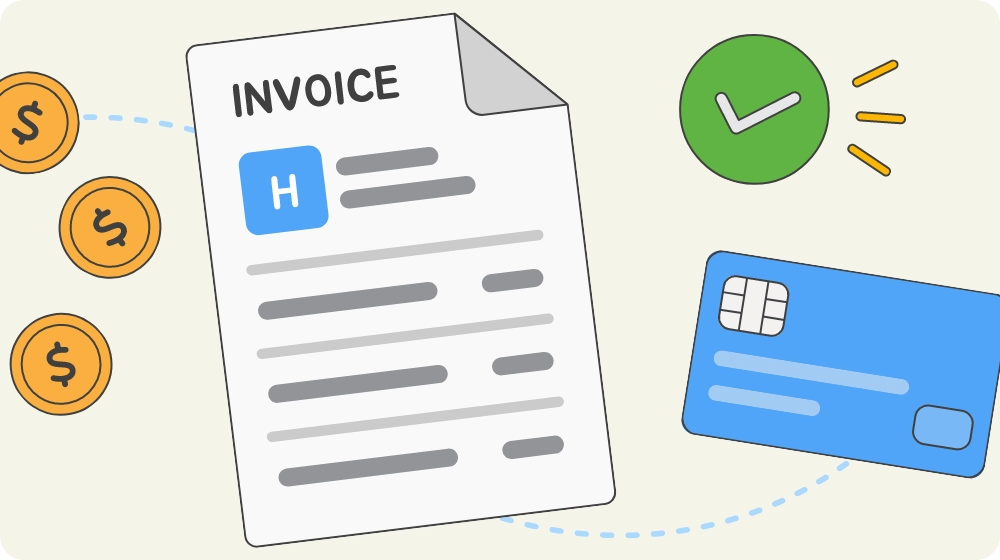
The best way to ask a client for payment professionally and politely is to send a short, friendly email that identifies the invoice, states the amount owed and due date, and provides clear instructions for making the payment. If the invoice is overdue, begin with a gentle reminder before gradually adopting a firmer tone if necessary.
For freelancers, independent contractors, and small business owners, knowing how to handle payment requests is essential for maintaining healthy cash flow and positive client relationships.
In this guide, we'll explain when and how to request payment, share ready-to-use email templates for different situations, and explore what to do when a client repeatedly fails to pay.
How to ask a client for payment in 5 simple steps
Whether you're sending your initial invoice or chasing overdue payments, a professional payment request should be straightforward.
- Choose the right time. Send your invoice promptly after completing the agreed work or reaching a payment milestone.
- Use a polite, professional tone. Be friendly and respectful without apologizing for requesting payment.
- Include essential payment details. Specify the invoice number, outstanding amount, due date, and preferred payment method.
- Make paying easy. Attach the original invoice and include a direct payment link where possible.
- Follow up consistently. If the client hasn't paid, send payment reminders at appropriate intervals, becoming progressively firmer.
The key is to communicate clearly while giving your client every opportunity to resolve the outstanding payment.
When should you ask a client for payment?
The right time to request payment depends on your business agreements, the type of work involved, and your relationship with the client.
Ideally, payment terms should be established before work begins. This ensures both you and your client understand when payment is expected and prevents unnecessary disagreements later.
Before starting work
For larger projects or new clients, requesting an upfront payment can reduce financial risk.
An upfront payment request might involve a 25% or 50% deposit, with the remaining balance due upon project completion. Alternatively, you might arrange milestone payments as specific stages of the project are completed.
Requesting payment upfront is particularly common among freelancers, designers, consultants, and other service providers.
Immediately after completing work
If your agreement specifies payment upon completion, send the invoice as soon as the work is finished.
Avoid waiting several days or weeks to invoice the client. Prompt invoicing demonstrates professionalism and helps ensure timely payments.
Include the project name, completed services, total amount, and payment deadline.
Before the payment due date
You don't necessarily need to wait until an invoice becomes overdue to send a reminder.
For example, if an invoice has 30-day payment terms, consider sending a friendly reminder three to five days before the due date.
This gives clients time to arrange payment, particularly if their organization has a lengthy internal approval process.
After the payment deadline
If the client pays late, it's reasonable to send a polite email reminder one day after the due date.
Remember that an unpaid invoice doesn't necessarily mean the client is deliberately avoiding payment. They may have simply forgotten, missed your email, or experienced an administrative delay.
Start by giving them the benefit of the doubt.
How to ask for payment politely: 7 practical tips
1. Keep your message short and professional
When requesting payment, clarity is more important than elaborate explanations.
Your client should be able to understand why you're contacting them, how much they owe, and what action they need to take within a few seconds.
Avoid lengthy introductions or unnecessarily apologetic language.
For example, rather than writing, "I'm really sorry to bother you, but I was wondering whether you might have had a chance to look at my invoice," try:
"Just a friendly reminder that invoice #1045 for $1,200 was due on October 15. Could you please confirm when payment will be processed?"
This communicates the same message without making the payment request seem unreasonable.
2. Include all relevant invoice information
A payment reminder email should contain enough information for the client to identify and settle the invoice without searching through previous correspondence.
Include the invoice number, project details, original due date, outstanding balance, and available payment options.
It's also helpful to attach the invoice again, even if you previously sent it.
The less work your client needs to do, the more straightforward the payment process becomes.
3. Use a friendly but confident tone
There's a difference between asking for payment politely and sounding uncertain about whether you're entitled to receive it.
You provided an agreed service, and the client is responsible for paying according to your contract.
Maintain a professional tone by using phrases such as "I'm following up on," "This is a quick reminder," or "Could you please confirm the expected payment date?"
Avoid aggressive statements or accusations, particularly during the first follow up email.
4. Make it easy for clients to pay
Sometimes, delays occur because paying an invoice is unnecessarily complicated.
Offering several payment methods can remove friction and help you get paid faster.
Depending on your business, you might accept bank transfers, credit cards, or online payment platforms.
Include a payment link directly in your email when possible, and make sure the payment details are accurate.
If a client has a preferred payment method, consider accommodating it where practical.
5. Send reminders at appropriate intervals
Sending a reminder every few hours is unlikely to improve your chances of receiving payment. It may also damage the client relationship.
Instead, develop a structured schedule for following up on outstanding invoices.
For example, send a friendly reminder shortly after the deadline, another message after seven days, and a more formal request after 14 days.
For long-overdue invoices, you may need to follow up on a weekly basis until the situation is resolved.
Consistency demonstrates that you take your payment terms seriously.
6. Contact the right person
The person who commissioned your work isn't always responsible for processing invoice payments.
In larger organizations, invoices may need approval from a project manager before being forwarded to an accounts payable department.
If your contact isn't responding, politely ask whether there's someone else you should contact about payment.
A simple phone call can sometimes resolve an issue more quickly than several unanswered emails.
7. Keep records of your communication
Maintain a record of invoices, emails, payment dates, and any conversations about outstanding payments.
These records help you track which clients have paid and which invoices require further attention.
They can also become important if a disagreement escalates into a formal dispute.
For ongoing work, accurate recordkeeping makes it easier to distinguish between new invoices, partial payments, and older unpaid balances.
6 professional payment request email templates
The following templates demonstrate how to ask a client for payment in different situations. Each uses a professional approach while adjusting the tone to reflect how urgent the payment has become.
1. Initial payment request email
Subject: Invoice #1045 – Website Design Project
Hi Sarah,
I hope you're doing well.
I've attached invoice #1045 for the website design project we recently completed.
The total amount due is $1,500, with payment requested by November 15.
You can make payment using the details provided in the invoice or through the payment link below.
Please let me know if you have any questions.
Kind regards, James
This initial invoice email establishes clear expectations without putting unnecessary pressure on the client.
2. Upfront payment request email
Subject: Deposit Request – Website Redesign Project
Hi Sarah,
I'm looking forward to getting started on your website redesign.
As outlined in our agreement, a 50% upfront payment is required before work begins.
I've attached the deposit invoice for $1,000, which is due by November 5.
Once payment is received, I'll confirm the project start date and next steps.
Thanks, and I look forward to working together!
Kind regards, James
This template is particularly useful when working with new clients or undertaking substantial projects that require significant preparation.
3. Friendly reminder before the due date
Subject: Quick Reminder – Invoice #1045 Due Soon
Hi Sarah,
Hope you're having a great week!
Just a quick reminder that invoice #1045 for $1,500 is due on November 15.
I've attached another copy for convenience.
Please let me know if you need anything else to process the payment.
Thanks again!
Kind regards, James
A pre-deadline reminder can prevent late payments without creating an awkward conversation.
4. Payment reminder email one day overdue
Subject: Payment Reminder – Invoice #1045
Hi Sarah,
I hope you're well.
I'm following up on invoice #1045 for $1,500, which was due yesterday, November 15.
I understand things can get busy, so I just wanted to gently remind you that payment is outstanding.
I've attached the invoice again for convenience.
If you've already made the payment, please disregard this reminder.
Thanks for your prompt attention.
Kind regards, James
This message assumes the delay may be accidental and gives the client an opportunity to resolve it.
5. Payment request one week overdue
Subject: Follow-Up – Overdue Invoice #1045
Hi Sarah,
I'm following up regarding invoice #1045 for $1,500, which was due on November 15 and is now a week overdue.
I haven't received payment or confirmation of when it will be processed.
Could you please arrange payment or let me know the expected payment date?
I've attached the original invoice for reference.
I appreciate your assistance in resolving this.
Kind regards, James
When an invoice is a week overdue, it's reasonable to request a specific payment date rather than simply reminding the client of the outstanding balance.
6. Final notice for an overdue payment
Subject: Final Payment Notice – Invoice #1045
Hi Sarah,
I'm writing regarding invoice #1045 for $1,500, originally due on November 15.
Despite previous reminders, the invoice remains unpaid.
Please arrange full payment by December 15 or contact me before that date to discuss any issues preventing payment.
If payment isn't received, I may need to consider further recovery options in accordance with our agreement and applicable law.
I'd prefer to resolve this directly and appreciate your prompt response.
Kind regards, James
A final notice should remain factual and professional, even when the client's failure to pay has become frustrating.
Avoid threatening legal action unless you're genuinely prepared to pursue it and have established that doing so is appropriate.
How often should you follow up on overdue payments?
When collecting overdue payments, timing matters almost as much as wording.
Sending too many reminders can frustrate clients, while waiting too long can make outstanding invoices harder to recover.
A structured reminder schedule helps you remain consistent without making unnecessary demands.
| Timing | Recommended action |
|---|---|
| 3–5 days before due date | Send a friendly reminder |
| 1 day overdue | Send a polite payment reminder email |
| 7 days overdue | Follow up and request a payment date |
| 14 days overdue | Send a firmer reminder or make a phone call |
| 30 days overdue | Issue a formal payment request |
| 45+ days overdue | Consider a final notice or appropriate recovery action |
This schedule is a general example rather than a legal requirement. Your approach should reflect the agreed payment terms, the amount owed, and the client's communication.
For instance, a reliable client who has simply forgotten an invoice may only need one reminder. Someone who repeatedly ignores payment requests may require a more formal approach.
What to do when a client refuses to pay
Occasionally, even repeated payment reminders won't produce a response.
If a client refuses to pay or consistently ignores your messages, you may need to take additional steps to collect overdue payments.
1. Contact the client directly
Before escalating the situation, try speaking to the client over the phone.
Ask whether there's a problem with the invoice, whether they're dissatisfied with the work, or whether financial difficulties are preventing payment.
Keep the conversation calm and focused on finding a solution.
If the client disputes the charges, review your signed contract and supporting documentation before proceeding.
2. Offer a payment plan
If the client acknowledges the debt but cannot make full payment immediately, consider offering a payment plan.
For example, you might agree to divide a $2,000 outstanding balance into four weekly payments of $500.
Make sure the arrangement is documented in writing, including the amount and date of each installment.
Although accepting installments may delay receiving the full amount, it can be preferable to an extended dispute.
3. Send a formal demand letter
If informal requests fail, a formal demand letter may be the next appropriate step.
Unlike an ordinary reminder email, a demand letter explicitly requests settlement of an outstanding debt and identifies potential consequences if payment isn't received.
It should outline the scope of work, project completion date, invoice number, total amount owed, previous payment requests, and final payment deadline.
Consider sending the letter via certified mail or another trackable delivery method to establish proof of delivery. Check whether your jurisdiction requires a particular method of notice.
4. Consider a collection agency or legal action
When other approaches fail, you may consider engaging a debt collection agency or pursuing legal action.
A collection agency can help recover outstanding payments, although its fees will reduce the amount you ultimately receive.
Alternatively, small claims court may offer a relatively accessible way to recover money without undertaking a long court process.
For example, New York City's Small Claims Court handles eligible monetary claims of up to $10,000. Other New York courts have different limits, and businesses may need to use commercial small claims procedures.
Before escalating, weigh the likely recovery amount against the costs, time, and potential consequences for future work with the client.
It's also important to follow applicable debt collection laws. New York City, for example, has specific rules governing certain debt collection activities, although not every business-to-business invoice dispute falls under those rules.
What does New York law say about overdue client payments?
Freelancers and independent contractors working in New York may have additional protections when clients fail to pay.
Under New York State's Freelance Isn't Free Act, which took effect on August 28, 2024, qualifying freelance workers have legal rights concerning written contracts and timely payment.
The law establishes several important requirements:
- Written contracts: Covered freelance arrangements worth $800 or more, including qualifying work aggregated over a 120-day period, generally require a written contract.
- Payment deadlines: Clients must pay by the date specified in the contract. If no payment date is specified, payment is generally required within 30 days of completing the contracted work.
- Protection against nonpayment: Freelancers may be entitled to double damages for certain violations involving unpaid compensation, as well as other available remedies.
- Protection against retaliation: Hiring parties cannot unlawfully retaliate against freelancers for exercising their rights.
These protections are subject to the law's definitions, exclusions, and enforcement requirements. Double damages are not automatically imposed whenever an invoice is 30 days overdue.
New York City also has its own Freelance Isn't Free Act, which provides protections for qualifying freelance workers.
Freelancers dealing with unpaid invoices should review the applicable legislation and consider seeking legal advice before beginning formal recovery proceedings.
How to prevent late payments in the future
Although knowing how to request payment is important, preventing payment problems is even better.
A few simple improvements to your invoicing and project management practices can reduce the number of awkward conversations you need to have.
Define payment terms before starting work
Every project should begin with clear expectations about compensation.
Your contract should establish the total price, payment deadline, accepted payment methods, and any applicable late fees.
If you intend to charge late fees, specify them in advance and ensure they're permitted under applicable law. Don't simply add unexpected charges to an overdue invoice.
Request deposits or milestone payments
For substantial projects, consider dividing payments into stages.
An upfront deposit reduces your initial financial exposure, while milestone payments ensure you're compensated as work progresses.
This is particularly useful for ongoing work or projects lasting several months.
Automate your invoicing and reminders
Using invoicing software to generate automated invoices and send payment reminders can save time and reduce administrative work.
Rather than manually checking every invoice, you can establish reminder schedules based on each payment deadline.
Automation also ensures clients receive consistent communications, even during busy periods.
Track your time and invoice accurately
For businesses that bill by the hour, accurate time tracking can help prevent payment disputes.
Using a time tracking app such as Hourly allows you to keep a record of time spent on different projects, making it easier to prepare accurate invoices and explain your charges to clients.
Detailed records are particularly useful when clients question the number of hours billed or request clarification about completed work.
Frequently asked questions
Is it rude to ask a client for payment?
No. Requesting payment for completed work is a normal business practice. As long as you communicate respectfully and follow the agreed payment terms, there's nothing rude about asking a client to settle an invoice.
How do you politely ask for payment in a message?
Keep the message brief, friendly, and specific. For example: "Hi Sarah, just following up on invoice #1045, which was due last Friday. Could you please let me know when I can expect payment? Thanks!"
How do you ask for payment without sounding pushy?
Use neutral language, provide the relevant invoice details, and avoid making assumptions about why payment is late. Acknowledge that the client may have simply forgotten, but clearly communicate when payment is expected.
Should you stop working for a client who hasn't paid?
If a client repeatedly misses payment deadlines, consider pausing future work until the outstanding balance is resolved. However, review your contract before suspending services, as stopping work without following the agreed procedures could create additional problems.
How do you ask for immediate payment professionally?
Explain why immediate payment is required and provide a straightforward way to complete it. For example: "As agreed, payment is required before the next project stage begins. Please arrange payment using the attached invoice so we can proceed as scheduled."
Get paid on time without damaging client relationships
Learning how to ask a client for payment professionally and politely is an essential skill for anyone running a business.
The most effective approach combines clear payment terms, accurate invoices, friendly reminders, and consistent follow-up.
Remember that asking for payment isn't a personal favor. It's a reasonable expectation based on the work you've completed and the agreement you've made.
By staying professional, communicating clearly, and making it easy for clients to pay, you can improve cash flow, reduce outstanding invoices, and maintain stronger working relationships.
