


















Remote Team Management
Tips for managing remote teams
Remote work is no longer a temporary response to changing circumstances. For many organisations, it has become a permanent part of how business operates. Whether you're leading remote teams across multiple continents or managing a small local group that occasionally works from home, the demands of modern leadership have changed dramatically.

The biggest challenge is no longer the technology itself. Today's organisations have access to excellent collaboration software, reliable video conferencing, cloud-based ocumentation, and sophisticated project management tools. Instead, success increasingly depends on how managers communicate, build trust, and create a connected experience for employees who may rarely, if ever, share the same physical workspace.
These tips for managing remote teams will help you create stronger communication, better accountability, and a healthier workplace in 2026.
Why managing remote teams requires a different approach
One of the biggest misconceptions about managing remote teams is that it's simply traditional management performed over Zoom. In reality, a remote setting changes almost every aspect of leadership.
Managers lose many of the subtle signals that come naturally in an office setting. Casual conversations disappear. Body language becomes harder to interpret. Small misunderstandings can linger because they aren't naturally resolved over coffee or during walks between meetings.
A successful remote team management strategy recognises that these missing interactions need to be replaced with intentional systems rather than left to chance.
Rather than relying on physical proximity, leaders need deliberate communication habits, documented processes, and stronger emotional awareness.
1. Establish clear expectations from day one
Every successful remote work environment begins with clarity.
When employees know exactly what's expected, they spend less time guessing priorities and more time delivering meaningful work. Unclear responsibilities often create unnecessary stress and reduce productivity.
Set clear expectations around:
- Responsibilities
- Decision-making authority
- Deadlines
- Communication channels
- Availability
- Performance measures
The goal isn't to monitor every minute but to create enough certainty that everyone can work independently with confidence.
This becomes particularly important for remote employees, who cannot simply walk over to a colleague's desk to ask for clarification.
2. Communicate intentionally rather than constantly
Many managers mistakenly believe remote leadership means more meetings. It doesn't. Instead, effective leaders communicate intentionally, making every interaction purposeful. Some information belongs in instant messaging. Other conversations deserve scheduled video calls. Important project updates should be documented permanently rather than buried inside chat threads. Good leaders also recognise when asynchronous communication is more productive than interrupting people's focus. The objective isn't constant contact. It's making communication meaningful.
3. Create communication norms everyone understands
One reason communication gaps appear is because different employees develop different assumptions. Should messages be answered immediately? Can someone mute notifications after work? Is email reserved for formal communication? How should urgent issues be escalated? Creating written communication norms removes uncertainty.
Agree on:
- Expected response times
- Preferred communication channels
- Meeting etiquette
- Documentation standards
- Escalation procedures
When everyone follows the same playbook, the entire team spends less energy interpreting expectations.
4. Build trust instead of monitoring activity
One of the fastest ways to damage morale is excessive surveillance. Successful organisations focus on outcomes rather than constant observation. Instead of measuring keyboard activity or online status, evaluate completed work, collaboration, initiative and quality. Employees who feel trusted generally become more engaged and willing to solve problems independently. This shift is particularly important when managing remote employees, where excessive monitoring often communicates distrust rather than accountability.
5. Make regular one-to-one conversations a priority
Managers often underestimate how valuable individual check-ins become once people begin working remotely. These conversations shouldn't only focus on deadlines.
Use them to:
- Discuss progress
- Remove obstacles
- Offer coaching
- Identify burnout
- Celebrate achievements
- Understand career aspirations
Employees often reveal challenges during private conversations that would never emerge during larger meetings.
6. Don't let meetings replace actual work
Many remote workers spend too much of their day attending meetings.
Before scheduling another call, ask:
- Does everyone need to attend?
- Could this update be shared in writing?
- Would a five-minute recorded video achieve the same outcome?
When meetings are necessary, keep them focused.
Effective team meetings should have:
- A clear agenda
- Defined outcomes
- Assigned responsibilities
- Follow-up documentation
Well-run meetings keep everyone on the same page without consuming unnecessary hours.
7. Choose the right tools—and integrate them properly
Technology should simplify work rather than complicate it. The right tools should reduce friction instead of creating additional administration.
Many organisations use combinations of:
- Microsoft Teams
- Shared documentation platforms
- Whiteboarding software
- Scheduling applications
- Task management software
Where possible, integrate tools so employees aren't duplicating information across multiple systems.
Strong project management becomes much easier when information flows automatically between systems.
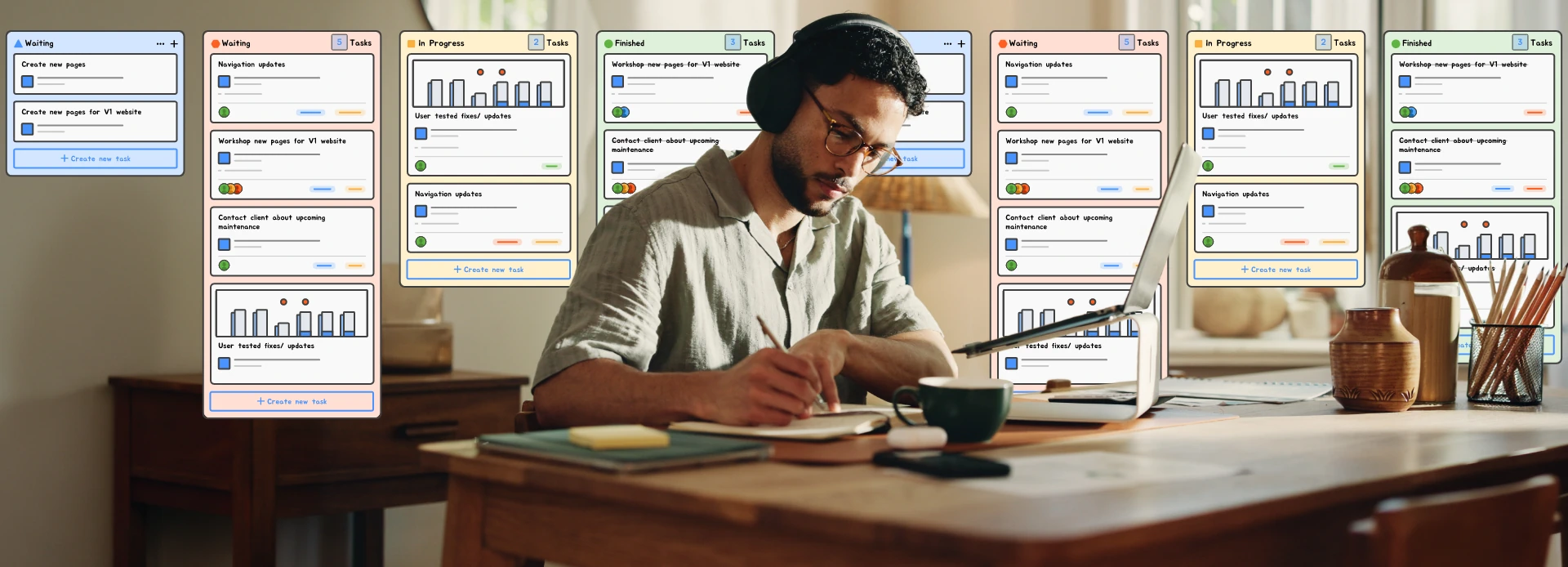
8. Use project management tools effectively
Simply purchasing software doesn't improve productivity.
The best project management tools make work visible without becoming administrative burdens.
Use them to:
- Assign responsibilities
- Track progress
- Record deadlines
- Identify bottlenecks
- Share updates
- Improve accountability
Good task tracking provides transparency while reducing the need for constant status meetings.
Employees should spend their time completing work—not reporting that they're completing work.
9. Pay close attention to company culture
Strong company culture doesn't happen accidentally. It becomes even more important when people rarely share the same building. Every interaction either strengthens or weakens culture. Leaders should consistently reinforce organisational values through:
- Recognition
- Decision-making
- Communication
- Behaviour
- Hiring
Without deliberate effort, culture slowly becomes transactional.
10. Invest in team culture beyond work
A productive workplace isn't built solely on deadlines. People collaborate better when relationships already exist. Developing team culture means creating opportunities for colleagues to know one another beyond project updates.
Simple activities might include:
- Coffee chats
- Interest groups
- Informal discussions
- Knowledge-sharing sessions
- Celebration events
Even small moments of connection strengthen long-term collaboration.
11. Use virtual team building activities thoughtfully
Not every employee enjoys mandatory online games. The best virtual team building activities feel natural rather than forced. Offer optional opportunities for connection, including:
- Trivia competitions
- Book clubs
- Learning sessions
- Cooking demonstrations
- Guest speakers
Some organisations also hold virtual happy hours, although these should always remain voluntary and inclusive.
Effective team building should strengthen relationships without creating additional pressure.
12. Help people maintain healthy work life balance
One hidden challenge of working remotely is that work often expands into personal time. Without commuting, many employees find themselves checking messages well into the evening. Managers should actively encourage a healthy work life balance.
Support employees by:
- Respecting non-working hours
- Discouraging unnecessary after-hours messaging
- Encouraging annual leave
- Modelling healthy boundaries
Protecting personal time ultimately improves long-term productivity. A sustainable work life balance benefits both employees and organisations.
13. Manage across time zones fairly
Global hiring continues to expand, making time zones an everyday management consideration. Instead of expecting every employee to adapt to headquarters, distribute inconvenience fairly. Rotate meeting times where possible, record important meetings and document decisions clearly. Accommodating time zone differences demonstrates respect and makes international collaboration significantly easier.
14. Foster collaboration instead of individual silos
Remote organisations sometimes become collections of individuals rather than cohesive teams.
Leaders should actively foster collaboration through shared ownership, cross-functional work and open knowledge sharing.
Encourage employees to:
- Ask questions publicly
- Share lessons learned
- Document processes
- Seek peer feedback
These habits help enhance collaboration across departments while reducing duplicated work.
15. Build psychological safety
Employees perform better when they feel comfortable expressing uncertainty. Creating psychological safety means encouraging questions, admitting mistakes and welcoming different viewpoints. Managers should model this behaviour themselves. If leaders openly acknowledge what they don't know, employees become more willing to contribute honestly. Innovation depends on people feeling safe enough to speak up.
16. Listen more than you speak
Strong leadership depends on excellent communication skills, but communication isn't only speaking. The most effective managers actively listen - instead of immediately solving every issue, ask questions. Encourage employees to explain their thinking, allowing you to understand the problem before proposing solutions. Listening builds trust while improving problem solving across the organisation.
17. Watch for common challenges before they grow
Every distributed team encounters predictable obstacles. These common challenges include:
- Isolation
- Miscommunication
- Delayed decision-making
- Burnout
- Knowledge silos
- Technology fatigue
Managers should routinely discuss challenges before they become serious issues. Regular feedback loops allow leaders to identify trends early rather than reacting after performance declines.
18. Support mental health proactively
Isolation affects employees differently. Some thrive independently, while others struggle without regular social interaction. At the end of the day, organisations should treat mental health as a leadership responsibility rather than an individual problem. Encourage reasonable workloads, supportive conversations and flexible scheduling where appropriate. Managers don't need to become counselors, but they should know how to recognize warning signs and direct employees towards available support.
19. Balance flexibility with accountability
Modern employees increasingly value flexible work arrangements. However, flexibility should still exist within clear organisational expectations. Managers shouldn't expect employees to be online every minute of the day. Instead, focus on agreed deliverables, responsiveness during agreed working hours, and collaborative behaviour. This approach creates autonomy while maintaining accountability.
20. Adapt your hiring process for remote success
Building a successful remote workforce starts long before someone's first day.
Your hiring process should evaluate:
- Communication ability
- Self-management
- Written communication
- Independence
- Adaptability
- Collaboration
Technical skills remain important, but successful remote employees also demonstrate initiative, reliability and strong organisational habits.
21. Lead with emotional intelligence
Perhaps the most valuable leadership skill in 2026 is emotional intelligence. Managers no longer have constant visibility into how employees are feeling, which requires leaders to be more attentive to subtle changes in behaviour. A good manager should notice when someone suddenly becomes quiet, recognise signs of overload, while also celebrating employee successes. Offering empathy during difficult periods will show you how human-centred leadership builds stronger teams.
22. Keep communication open across the organisation
Successful leaders keep communication open beyond their immediate team. This will help employees understand how their work contributes to the entire organization rather than their immediate surroundings. Regular business updates, leadership Q&A sessions and transparent decision-making help employees understand broader priorities. Because when people understand the bigger picture, they're more likely to make good decisions independently.
23. Accept that remote management keeps evolving
There is no perfect formula for managing remote organisations. Technology changes. Employee expectations change. Business priorities change. The most successful leaders continue learning, gathering feedback and refining their approach. Whether you're managing remotely for five people or five thousand, flexibility remains one of the most valuable leadership qualities.
The future of remote work isn't simply about replacing the traditional office environment with digital tools. It's about creating workplaces where people can do their best work regardless of location.
A successful fully remote team combines trust, structure, empathy and accountability. It recognises that effective leadership is less about watching people work and more about helping them succeed.
The organisations that thrive in modern remote work settings will be those that invest in relationships, communicate clearly, and continually refine their management strategies as the needs of their people evolve. By applying these best practices, leaders can build resilient, engaged teams capable of performing at a high level wherever they happen to be.