






















Talent Acquisition Strategies
How to build successful talent acquisition strategies in 2026
Finding exceptional employees has never been as competitive as it is today. Artificial intelligence is transforming recruitment, remote work has expanded hiring across borders, and skilled professionals have more choice than ever before. At the same time, employers face changing workforce expectations around flexibility, career development, workplace culture, and purpose.
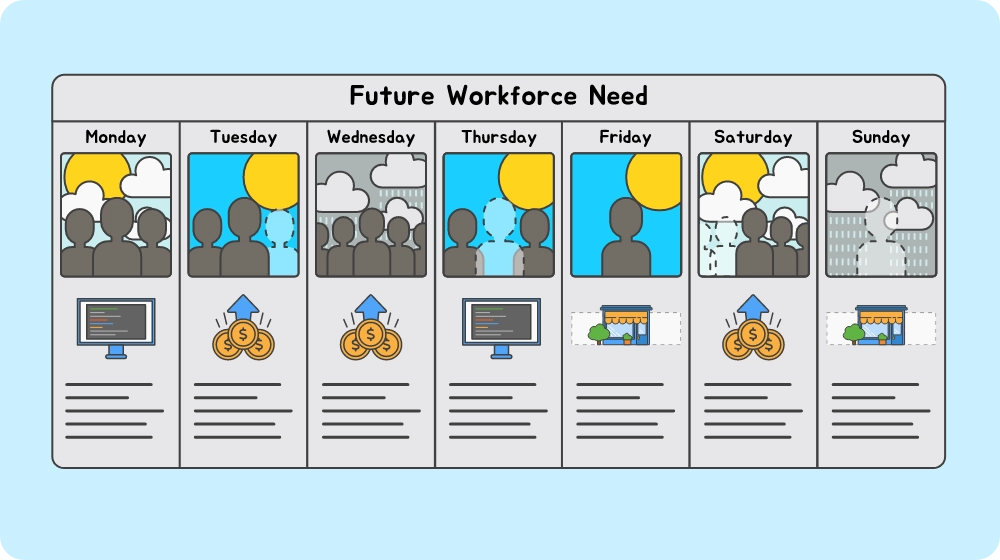
That means talent acquisition strategies can no longer revolve around simply advertising vacancies and waiting for applications to arrive. Instead, organizations need a proactive, long-term approach that continuously attracts, nurtures, and retains great people before vacancies even exist.
The most successful businesses understand that talent acquisition is far more than filling vacancies. It's about creating systems that consistently identify, engage, and hire the people who will help the company achieve its long-term vision.
In this guide, we'll explore how to build a successful talent acquisition strategy in 2026, from planning your workforce and strengthening your employer reputation to leveraging AI responsibly while maintaining a human-first hiring experience.
What is talent acquisition?
While many people use the terms interchangeably, there is a subtle but important difference between recruitment and talent acquisition.
Recruitment generally focuses on filling open positions as quickly as possible. Talent acquisition, meanwhile, is a broader, ongoing discipline that considers both immediate vacancies and the organization's future workforce.
An effective strategy looks beyond today's vacancies to anticipate tomorrow's skill requirements, leadership needs, and market changes. Instead of reacting whenever someone resigns, organizations continually develop relationships with potential hires and maintain a healthy pipeline of future candidates.
This long-term approach helps reduce hiring costs, improve employee retention, and ensure businesses always have access to the skills they need.
Why talent acquisition matters more than ever in 2026
Several trends have dramatically reshaped hiring over the past few years.
Artificial intelligence now assists with sourcing candidates, screening resumes, scheduling interviews, and even drafting communications. Meanwhile, hybrid and remote work have significantly widened candidate pools, giving employers access to global talent while simultaneously increasing competition.
Candidates also expect far more from employers. They research organizations thoroughly before applying, read employee reviews, examine leadership values, and look for evidence that a company genuinely supports career growth and employee wellbeing.
Businesses that fail to adapt risk missing out on exceptional people, while organizations with successful talent acquisition practices gain a lasting advantage.
Ultimately, great hiring is no longer just an HR function—it is a strategic business capability.
1. Align hiring with your business strategy
Every hiring decision should begin with your organization's wider direction.
Before advertising any role, identify your business goals, expected growth, upcoming projects, and future skill requirements. Your recruitment activities should directly support these priorities rather than simply replacing departing employees.
This is where strategic talent acquisition differs from reactive recruiting. Instead of asking, “Who do we need today?”, the better question is, “Who will help us succeed over the next three to five years?”
The strongest organizations ensure their hiring supports broader business objectives, making workforce planning an integral part of executive decision-making.
2. Forecast future workforce needs
One of the biggest mistakes businesses make is hiring only when vacancies arise.
Effective workforce planning considers retirements, promotions, business expansion, automation, emerging technologies, and changing customer demand.
Understanding both current and future needs enables organizations to identify capability gaps before they become urgent.
This proactive approach also helps organizations prepare for future hiring requirements, reducing the pressure that often leads to rushed decisions and poor recruitment outcomes.
3. Build a compelling employer brand
Your reputation as an employer influences almost every stage of recruitment.
A strong employer brand encourages talented people to seek out your organization rather than requiring constant advertising.
Developing a compelling employer brand means communicating:
- Your mission and purpose
- Career development opportunities
- Leadership philosophy
- Flexible working options
- Employee wellbeing initiatives
- Learning and development support
- Diversity commitments
Combined, these elements create an attractive employer value proposition that differentiates your business from competitors.
Organizations with a strong employer brand often receive more applications, attract better-quality candidates, and experience lower recruitment costs.
4. Showcase authentic employee stories
Candidates trust employees far more than marketing copy.
Sharing genuine employee stories helps applicants understand what working at your organization actually feels like.
These stories can include:
- Career progression
- Learning opportunities
- Flexible working experiences
- Team collaboration
- Personal achievements
Publishing employee success stories across careers pages, social media, and recruitment campaigns provides authentic insight into daily life inside the organization.
5. Create an outstanding candidate experience
Every interaction shapes the candidate experience.
Applicants remember:
- How quickly you respoond
- Whether interviews start on time
- How respectful interviewers are
- Whether communication remains clear
- How easy it is to apply
A positive candidate experience improves offer acceptance rates and strengthens your reputation—even among unsuccessful applicants.
Remember that every applicant should leave with a positive experience, regardless of whether they receive an offer.
6. Simplify the application process
Many organizations unintentionally lose excellent candidates through overly complicated applications.
Review you application process regularly
Ask yourself:
- Is it mobile-friendly?
- Does it require unnecessary account creation?
- Are candidates forced to repeat resume information?
- Can applications be completed quickly?
Reducing friction improves completion rates and keeps talented applicants engaged throughout the hiring journey.
7. Write better job descriptions
Strong job descriptions attract better applicants while discouraging unsuitable ones.
Rather than listing endless requirements, focus on:
- Outcomes of the role
- Team environment
- Career opportunities
- Required competencies
- Essential versus desirable qualifications
Well-written descriptions also improve the performance of job postings, making them more discoverable and appealing.
8. Choose the right recruitment channels
Different candidates search in different places.
Rather than relying on a single source, diversify your advertising through:
- Industry communities
- Professional associations
- University partnerships
- Social media
- Specialist recruiters
- Job boards
- Networking events
Posting every vacancy on multiple job postings platforms increases visibility while allowing employers to compare which channels consistently produce the highest-quality applicants.
Some roles may also benefit from career fairs, particularly graduate and early-career recruitment.
9. Build relationships before vacancies exist
The best candidates are often not actively looking for work.
Instead of waiting until positions become available, begin building relationships with potential candidates long before they're needed.
Maintaining a healthy talent pipeline allows organizations to respond quickly when vacancies appear.
Regular newsletters, networking events, webinars, and LinkedIn engagement all help keep your organization visible to prospective employees.
This approach is especially valuable for attracting future talent with niche or difficult-to-find skills.
10. Balance active and passive recruiting
While active job seekers remain an important source of applicants, many outstanding professionals aren't searching job websites daily.
Modern recruiting combines traditional advertising with relationship-building and targeted outreach.
By engaging both active candidates and passive professionals, organizations significantly expand their available talent pool.
11. Use technology wisely
Modern recruitment technology saves enormous amounts of administrative time.
Many organizations now rely on applicant tracking systems to manage applications, coordinate interviews, and streamline communication.
Similarly, candidate relationship management platforms help recruiters maintain ongoing relationships with promising candidates who may not yet be ready to change jobs.
Technology should remove repetitive administration — not replace human judgement.
12. Make skills the priority
Increasingly, organizations are embracing skills based hiring rather than relying exclusively on formal qualifications or previous job titles.
Practical assessments, work samples, and structured interviews often predict success better than resumes alone.
When evaluating applicants, employers should also assess soft skills such as:
- Communication
- Adaptability
- Collaboration
- Emotional intelligence
- Critical thinking
- Learning agility
These capabilities often determine long-term performance just as much as technical expertise.
13. Strengthen employee referrals
Your own workforce is often your most valuable recruitment channel.
An effective employee referral program encourages staff to recommend talented people from their professional networks.
Many businesses now support referrals with dedicated employee referral software, simplifying submissions while tracking incentives and outcomes.
Well-designed employee referral programs frequently deliver faster hiring, higher retention, and stronger cultural alignment.
14. Don't forget former employees
Employees sometimes leave for perfectly positive reasons.
Maintaining relationships through employee alumni networks allows organizations to reconnect with experienced people whose circumstances later change.
Former employees already understand your systems, values, and culture, making them excellent candidates for future opportunities.
15. Support internal mobility
Hiring externally isn't always the best solution.
Encouraging internal mobility enables existing employees to explore new roles, develop new skills, and progress their careers without leaving the organization.
Promoting from within often boosts retention while preserving valuable institutional knowledge.
It also demonstrates that career progression is genuinely possible, supporting broader employee engagement initiatives.
16. Build diverse hiring practices
Organizations consistently benefit from a diverse and inclusive workplace.
Expanding sourcing channels, reviewing interview practices, removing unnecessary degree requirements, and using structured evaluations all help reduce unconscious bias.
The objective isn't simply diversity for its own sake—it's ensuring every capable candidate receives equal opportunity to demonstrate their ability.
17. Equip hiring managers for success
Recruiters cannot deliver great hiring outcomes alone.
Effective hiring managers play a central role in attracting, interviewing, and selecting outstanding employees.
Provide interview training that covers:
- Structured interviews
- Consistent evaluation criteria
- Inclusive interviewing
- Behavioral questioning
- Candidate communication
Better collaboration between recruiters and managers improves hiring quality across the entire organization.
18. Encourage collaboration across hiring teams
Recruitment performs best when everyone works together.
Strong communication between hiring teams, department leaders, HR specialists, and executives reduces delays and improves decision-making.
Similarly, effective recruiting teams should regularly review hiring metrics, candidate feedback, and sourcing performance to continuously improve results.
19. Measure what matters
Successful recruitment relies on evidence rather than assumptions.
Useful metrics to include:
- Time-to-fill
- Time-to-hire
- Offer acceptance rate
- Source effectiveness
- Quality of hire
- Retention after 12 months
- Candidate satisfaction
These insights help organizations optimize hiring strategies while continually refining their overall recruiting strategy.
20. Think beyond today's vacancies
Many businesses focus exclusively on immediate hiring needs, but sustainable growth requires a longer perspective.
The most resilient organizations balance current recruitment with investment in current and future talent.
That means developing graduate programs, internships, leadership pathways, succession planning, and ongoing community engagement.
Over time, this creates a continuous supply of qualified professionals ready to contribute as opportunities arise.
Bringing everything together
No single initiative creates exceptional hiring outcomes on its own. Instead, a truly effective talent acquisition strategy combines workforce planning, employer branding, technology, candidate care, and long-term relationship building into one cohesive system.
Modern talent acquisition and recruitment should support both today's vacancies and tomorrow's ambitions. Whether your organization is filling immediate job openings or preparing for expansion several years ahead, every hiring decision contributes to long-term organizational capability.
The strongest acquisition strategies recognize that attracting the right talent requires more than advertising vacancies. They invest in relationships, continuously improve the recruitment process, nurture a robust talent acquisition process, and ensure every applicant feels respected throughout the journey.
As talent acquisition leaders increasingly partner with executives, their role extends well beyond recruitment administration. They help shape organizational capability, strengthen talent management, and create a sustainable workforce capable of driving business success.
Organizations that excel at leading talent acquisition also understand that hiring is never finished. They continually refine their hiring strategies, support candidate engagement, strengthen their employer brand, and measure progress against clearly defined talent acquisition goals.
Successful hiring also depends on attracting top talent and qualified candidates, but it's equally important to identify people whose values align with your company culture. This creates stronger teams, better retention, and a healthier workplace for current employees, existing employees, and every cohort of new hires that joins the business.
Ultimately, effective talent acquisition isn't just about filling job openings. It involves building relationships with skilled professionals, making informed hiring decisions, supporting recruitment professionals, and creating systems that evolve as organizations grow. While talent acquisition takes ongoing investment, businesses that commit to continuous improvement gain a lasting competitive advantage that supports both immediate performance and long-term success.